Vegetables in a Dog’s Diet – Which Are Healthy and Which Are Harmful?
A dog’s diet should be well-balanced and provide all the essential nutrients. While meat is the primary food source for dogs, adding healthy supplements such as vegetables can be beneficial. However, not all vegetables are suitable for dogs. Which vegetables should you include in your dog’s diet, and which ones could be harmful? Check out our guide!
Why Should You Give Your Dog Vegetables?
Vegetables are an excellent source of fibre, vitamins, and minerals that can support your dog’s health. Here are some reasons why they should be included in your pet’s diet:
- Rich in vitamins and minerals – vegetables provide essential nutrients such as vitamin A, C, K, potassium, and magnesium.
- Supports digestive health – fibre in vegetables helps regulate digestion and prevents constipation.
- Low-calorie addition – vegetables are light and low in calories, making them a great supplement for dogs on a weight-control diet.
- Natural antioxidants – some vegetables have anti-inflammatory and antioxidant properties, supporting cellular health.
Safe Vegetables for Dogs – What Can They Eat?
Not all vegetables are suitable for dogs, but many can be a healthy addition to their diet. Here is a list of vegetables that can be safely given to your pet:
Carrots
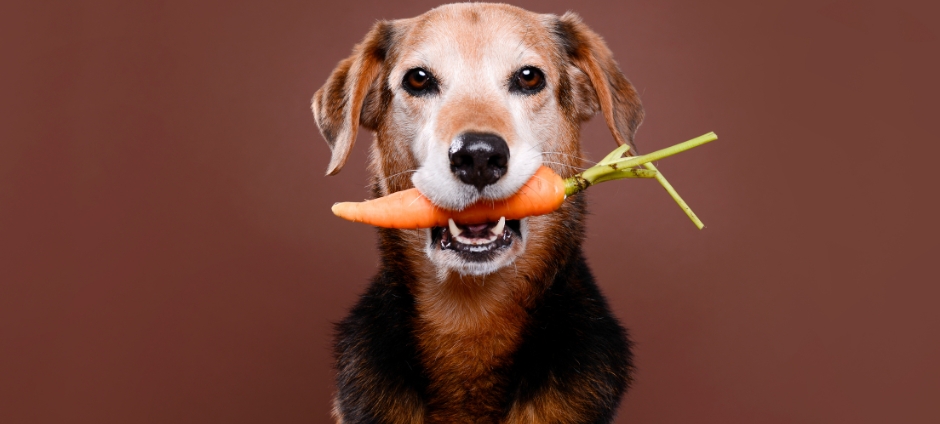
Carrots are an excellent source of beta-carotene, which supports eyesight and skin health. They can be given raw, cooked, or as a crunchy snack.
Pumpkin
Pumpkin is a great source of fibre and beta-carotene. It helps regulate digestion and can be used as a natural remedy for constipation or diarrhoea.
Cucumber
Cucumber is low in calories and helps keep your dog hydrated, especially on hot days.
Courgette
Easy to digest and rich in vitamins, courgette can be given both raw and cooked.
Broccoli
Broccoli is packed with vitamins and minerals, but it should be given in moderation as it can cause bloating.
Cauliflower
Like broccoli, cauliflower is nutritious but may lead to digestive issues if consumed in excess.
Beetroot
Beetroot is high in iron and fibre, but too much may cause urine discolouration.
Sweet Potatoes
Sweet potatoes are a fantastic source of carbohydrates, fibre, and vitamins.
Harmful Vegetables for Dogs – What to Avoid?
Some vegetables can be toxic to dogs and should not be included in their diet. Here is a list of vegetables to avoid:
Onion and Garlic
Onions, garlic, and other members of the allium family can damage red blood cells and lead to anaemia.
Avocado
Avocado contains persin – a substance toxic to dogs that can cause vomiting and diarrhoea.
Raw Potatoes
Raw potatoes contain solanine, which is toxic to dogs. Cooked potatoes are safe in moderation.
Tomatoes
Unripe tomatoes contain tomatine, which can be harmful to dogs.
Rhubarb
Rhubarb leaves contain calcium oxalates, which can cause kidney problems.
How to Serve Vegetables to Your Dog?
To ensure vegetables are easily digestible for your dog, follow these guidelines:
- Steam cooking – preserves most nutrients.
- Serving raw vegetables – some vegetables, such as carrots, cucumber, and courgette, can be given raw.
- Avoiding seasoning – vegetables for dogs should not contain salt, pepper, or other spices.
- Small portions – vegetables should be a supplement rather than a primary part of the diet.
Conclusion
Vegetables can be a valuable addition to a dog’s diet, providing essential nutrients and supporting overall health. However, it is important to remember that not all vegetables are safe – some can be toxic. Always serve them in appropriate amounts and tailor them to your dog’s individual needs. Introducing vegetables should be done gradually, and if in doubt, consult your vet.