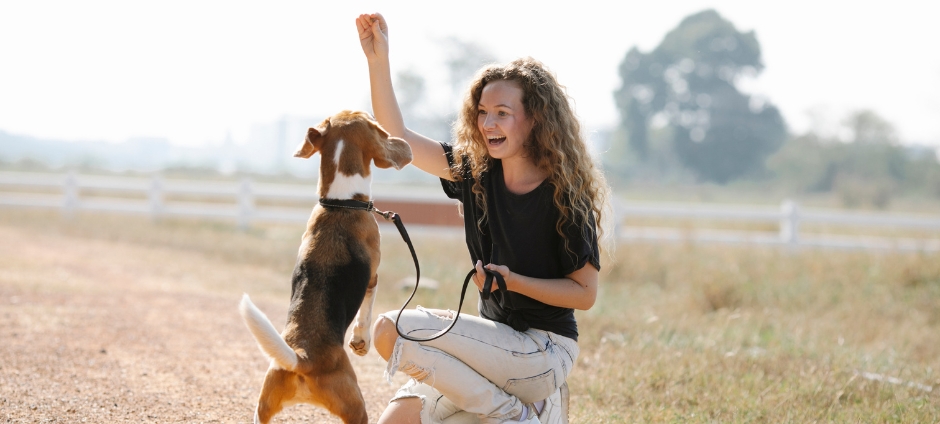
Training your dog is key to harmonious living between humans and their canine companions. However, effective training requires not only knowledge but also avoiding basic mistakes that can slow progress or even discourage your dog from learning. In this article, we discuss the most common dog training mistakes and explain how to effectively avoid them to achieve success.
1. Lack of Consistency in Training
One of the most common mistakes in dog training is inconsistency. Dogs learn through repetition, and inconsistent signals or variable reactions from the owner can create confusion. For example, if you allow your dog on the sofa sometimes but scold them for it at other times, the dog won’t understand what you want.
To avoid this mistake:
- Establish clear rules and stick to them.
- Communicate with other household members so that everyone uses the same commands and reacts similarly.
- Reward or correct your dog’s behaviour consistently in the same situations.
2. Overuse of Punishment
Some dog owners still rely on punishment rather than rewards in training. While correcting inappropriate behaviour is important, overusing punishment can make your dog fearful and erode their trust in you.
A better approach is to use positive reinforcement. Reward your dog for good behaviour with treats, praise, or playtime. This motivates them to keep trying and builds a positive relationship.
3. Training Sessions That Are Too Long
Dogs, like humans, have a limited attention span. Long and monotonous training sessions can tire them out, leading to frustration and a lack of progress. The optimal session length depends on the dog’s age and breed, but it typically ranges from 5 to 15 minutes.
To improve training efficiency:
- Plan short and dynamic sessions.
- End each session on a positive note, such as rewarding your dog for performing an easy command.
- Avoid overloading your dog with new information in a single training session.
4. Lack of Proper Motivation
Not all dogs respond to the same training methods. Some dogs are more motivated by treats, others by play, and others by verbal praise. Understanding what motivates your dog is essential.
To avoid motivation problems:
- Test different rewards to find what your dog enjoys most.
- Gradually reduce the frequency of rewards while keeping your dog motivated.
- Stay enthusiastic during training – your mood influences your dog!
5. Ignoring Signals from Your Dog
Every dog communicates their emotions and needs through body language. Ignoring signs of stress, fatigue, or frustration can lead to behavioural issues. If your dog starts yawning, turning their head away, or losing interest, it’s a signal to take a break.
To better understand your dog:
- Observe their reactions in different situations.
- Pause the training session if you notice signs of stress.
- Learn basic dog body language signals, such as tail wagging, ears pointing upwards, or tense muscles.
6. Insufficient Socialisation
Socialisation is the process where your dog learns to cope with various situations, people, and animals. Poor socialisation can lead to fear, aggression, or excessive excitement in unfamiliar circumstances.
To ensure good socialisation:
- Expose your dog to different environments from a young age, if possible.
- Provide controlled interactions with other people and animals.
- Don’t force your dog to interact if they’re visibly stressed.
7. Expecting Immediate Results
Dog training is a process that requires time, patience, and dedication. Many owners expect their dog to learn a new command within minutes, and a lack of quick results can lead to frustration. Remember, every dog learns at their own pace, and some breeds are naturally more trainable than others.
What you can do:
- Patiently repeat exercises.
- Appreciate small progress – every step in the right direction counts.
- Avoid comparing your dog to others.
Conclusion
Avoiding these mistakes in dog training can significantly speed up progress and make the learning process enjoyable for both you and your dog. Remember, the key to success is consistency, patience, and understanding your dog’s needs. By doing so, you’ll build a strong bond with your furry companion and ensure they lead a happy, balanced life.