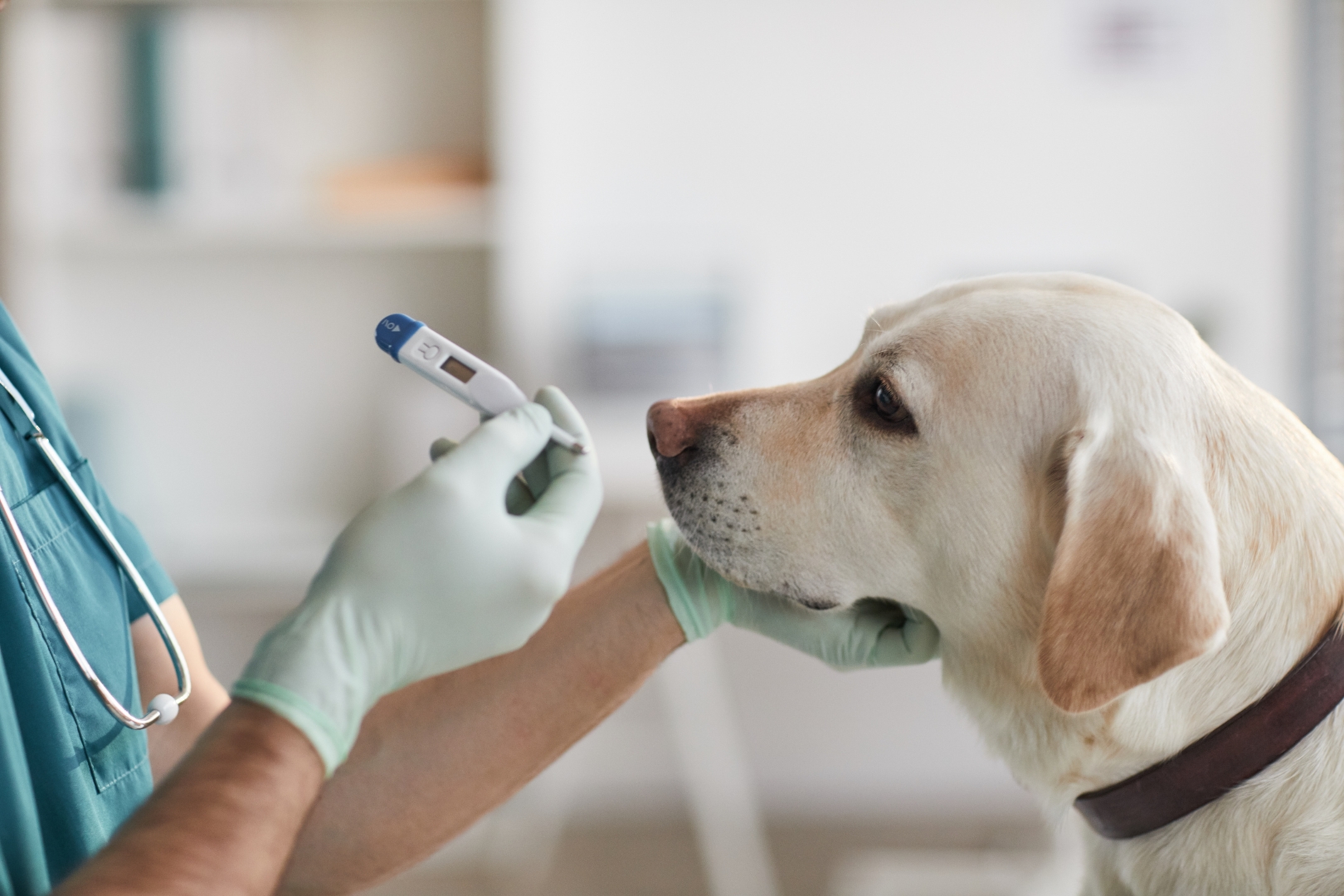
Dog’s Temperature – How to Check if Your Dog Has a Fever?
As a pet owner, keeping an eye on your dog’s health and responding to unusual symptoms is essential. One of the signs that something might be wrong is a raised body temperature. In this article, you’ll learn about a dog’s normal body temperature, how to identify signs of fever, and how to properly measure your dog’s temperature.
What is the Normal Temperature for Dogs?
A healthy dog’s body temperature typically ranges from 37.5°C to 39°C. This can vary slightly depending on breed, age, size, and even the time of day. For instance, smaller dog breeds might naturally have a slightly higher temperature, whereas older dogs may exhibit a slight decrease. Knowing what is normal for your dog is important – regular measurements can help determine your pet’s unique “normal” range.
Factors Affecting Temperature Variations
Keep in mind that a dog’s body temperature can rise temporarily due to physical activity, stress, excitement, or even exposure to warm environments. However, if the temperature is over 39°C at rest, it may indicate inflammation or infection.
Why is a Dog’s Body Temperature Important?
Temperature is an indicator of a dog’s overall health. Elevated body temperature can signal bacterial or viral infections, autoimmune diseases, or even cancer. Monitoring your dog’s temperature can help you react quickly to signs of illness before symptoms worsen.
What Does Temperature Reveal About a Dog’s Health?
A dog’s body reacts to illness by raising its temperature, much like it does in humans. Fever is a natural defence mechanism, but a temperature that’s too high can be dangerous, particularly if it persists or is accompanied by symptoms such as weakness, vomiting, diarrhoea, or loss of appetite.
Symptoms of Fever in Dogs
Recognising a fever in dogs isn’t always straightforward, as symptoms can be subtle. Here are common signs that may indicate a raised temperature:
- Lethargy and Lack of Energy – The dog appears listless and shows little interest in activities that usually bring joy.
- Rapid Breathing and Elevated Heart Rate – Fever affects metabolism, which can result in faster breathing and increased heart rate.
- Shivering – Shaking is a defence mechanism that helps the body raise its temperature to combat pathogens.
- Dry, Warm Nose – Although not always reliable, a dry nose often accompanies fever.
- Loss of Appetite – Illness can make dogs lose their appetite, leading to dehydration and weakness.
Do All Dogs Show the Same Fever Symptoms?
Certain dogs may display unusual fever symptoms. Puppies and younger dogs are more prone to quick energy loss and appetite reduction, whereas older dogs may show subtler signs. Knowing your dog’s behaviour is essential for early detection of fever.
How to Check Your Dog’s Temperature?
The most reliable way to determine if your dog has a fever is to measure their temperature using a thermometer. This process requires a bit of practice but is the most effective method.
Step-by-Step: How to Measure a Dog’s Temperature
- Prepare the Thermometer – A digital thermometer for pets works best, providing quick and accurate results.
- Apply Petroleum Jelly or Lubricant – Apply a small amount to the thermometer tip for easier insertion.
- Lift the Dog’s Tail Gently and insert the thermometer tip about 2–3 cm into the rectum (depending on the dog’s size).
- Wait for the Thermometer’s Signal – Most digital thermometers will alert you when the reading is complete.
- Read the Result – A reading above 39°C indicates fever.
Alternative Temperature Measurement Methods
If you don’t have a pet thermometer, infrared thermometers are a viable alternative, though they are less accurate than rectal thermometers.
Best Thermometers for Checking a Dog’s Temperature
There are different types of thermometers that you can use to measure a dog’s temperature. The most recommended options are:
- Digital Rectal Thermometers – These are the most accurate and are recommended by veterinarians.
- Non-contact Infrared Thermometers – Convenient but less precise.
- Pet Ear Thermometers – Though not always available, they’re user-friendly but require experience to use correctly.
Each of these thermometers has its pros and cons, but for accuracy and safety, a rectal thermometer is best.