What’s the Difference Between Dry and Wet Dog Food?
Dry Dog Food: Key Characteristics
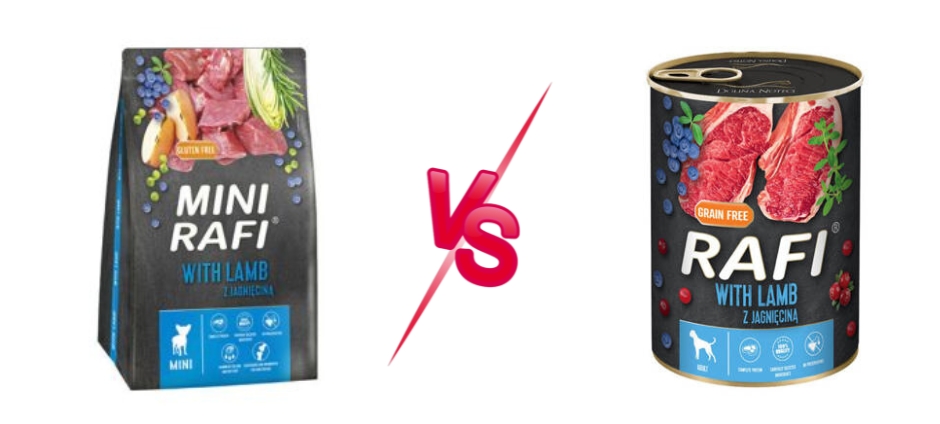
Dry dog food is a compressed form of pet food with a low moisture content, typically around 10%. It’s known for its hard texture and long shelf life.
- Advantages of dry dog food:
- Easy to store – no refrigeration required.
- Cost-effective – one pack lasts longer.
- Supports dental hygiene – the hard texture can help reduce tartar build-up.
- Convenient to portion – ideal for scheduled feeding.
- Drawbacks of dry dog food:
- Low water content – may not be suitable for dogs with hydration issues.
- Less appetising for picky eaters.
- May contain more carbohydrates, which isn’t always ideal for overweight dogs.
Wet Dog Food: Key Characteristics
Wet dog food contains as much as 70–85% water, giving it a soft texture and often making it more appealing in taste.
- Advantages of wet dog food:
- High water content – helps keep your dog hydrated.
- More palatable – perfect for fussy eaters.
- Usually higher in protein and lower in carbohydrates.
- Drawbacks of wet dog food:
- Shorter shelf life once opened.
- Higher cost – especially for large breeds.
- May contribute to tartar build-up without proper oral hygiene.
When Should You Choose Dry Dog Food?
Dry dog food is a good choice for dogs that:
- Don’t have hydration issues.
- Are prone to tartar build-up.
- Require a diet tailored to their specific needs (e.g., weight management, senior dogs, puppies).
When is Wet Dog Food a Better Option?
Wet dog food works well for dogs that:
- Have appetite issues.
- Need extra hydration due to kidney conditions or other health problems.
- Are older and struggle to chew hard food.
Can You Mix Dry and Wet Dog Food?
Yes, combining both types of food is a great way to get the benefits of both diets. For instance:
- Dry food helps maintain dental health and provides satiety.
- Wet food adds flavour and supports hydration.
However, be sure to balance the calorie intake and ideally choose products from the same brand to avoid digestive issues.
How to Choose the Right Food for Your Dog
Consider Your Dog’s Age and Size
- Puppies: Opt for high-calorie food rich in nutrients to support growth.
- Adult Dogs: Look for food with a balanced ratio of protein, fat, and carbohydrates.
- Seniors: Choose low-fat food with added joint-supporting ingredients like glucosamine.
Assess Your Pet’s Health
- Dogs with allergies may need hypoallergenic food.
- If your dog has kidney disease, choose wet food with low phosphorus content.
Check the Ingredients
Avoid products loaded with artificial additives, sugar, or grain fillers. The best foods list meat as the primary ingredient.