Free Feeding Cats – Pros and Cons of Constant Access to Food
Feeding cats often raises many questions. One of the most common is: should a cat always have access to food? Free feeding seems convenient, but is it really the best choice for your cat’s health? In this article, we’ll look at the benefits and risks of this approach.
What Does Free Feeding Mean?
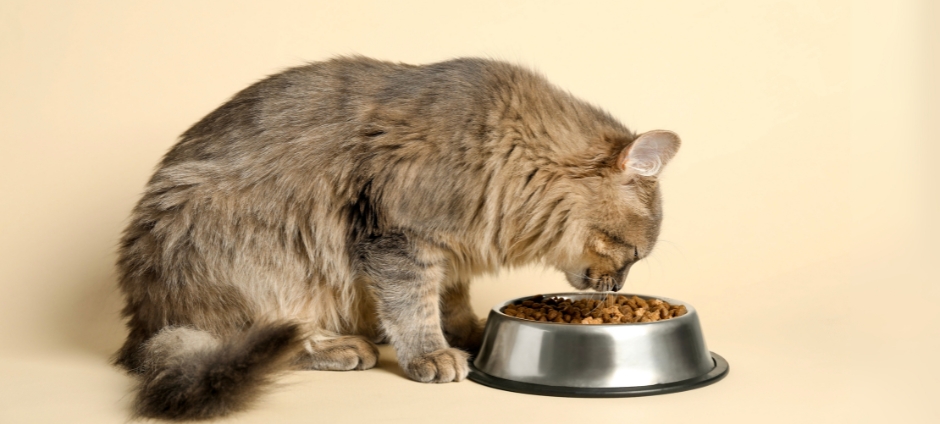
Free feeding means that a cat has 24/7 access to a bowl of food, usually dry kibble. The owner simply tops up the bowl whenever it’s empty, without a set feeding schedule. This method is popular among people who work long hours or with cats that like to eat irregularly throughout the day.
Advantages of Free Feeding
- Convenience – no need to plan mealtimes
- Less stress – cats don’t associate their owner solely with food
- Practical for independent cats – especially when the household is away for longer hours
- Natural grazing – cats in the wild tend to eat small meals frequently
Disadvantages and Risks
- Risk of overweight and obesity – particularly in less active cats
- Lack of portion control
- Behavioural issues – some cats may overeat out of boredom
- Difficult to monitor appetite – a loss of appetite may go unnoticed
Not all cats can regulate their own intake. For many, a constantly full bowl quickly leads to weight gain.
When Can Free Feeding Work?
Free feeding may be suitable for:
- young, highly active cats
- outdoor cats with higher energy needs
- multi-cat households (though dominance over food must be monitored)
For cats prone to weight gain, neutered cats, or those with low activity levels, scheduled portion feeding is usually a healthier option.
How to Switch from Free Feeding to Scheduled Meals
If you’d like to move away from free feeding, make the change gradually:
- slowly reduce the amount of food left in the bowl
- introduce set meal times
- use puzzle feeders or slow-feeding bowls to encourage natural hunting behaviour
Conclusion
Constant access to food has both pros and cons. While convenient, it doesn’t always support a cat’s health. Observe your cat’s body condition and habits, and consult your vet for advice on the best feeding method. A tailored approach to diet will keep your cat healthy and happy.